
Peru's Wild Side — Amazon, Colca Canyon & Lake Titicaca
Three of South America's most extraordinary landscapes, all reachable on a single family trip to Peru. Here's exactly what to expect — and how to make each one work with kids.

The Amazon Rainforest — What Families Actually Experience
The Peruvian Amazon is the world's most biodiverse rainforest, and children respond to it with an intensity that's hard to replicate anywhere else. Within a single afternoon boat ride, you can spot monkeys, river dolphins, giant lily pads, and caimans — no binoculars required. The most accessible entry points for families are Puerto Maldonado (Madre de Dios region) and Iquitos, both served by direct flights from Lima or Cusco.
Puerto Maldonado is typically the better choice for first-time family visitors. The lodges along the Tambopata River are comfortable, the wildlife is abundant, and the journey from Cusco is short enough to combine with a visit to Machu Picchu, Cusco, and the Inca heartland without exhausting everyone.
- Guided night walks to spot tarantulas, tree frogs, and luminescent insects
- Canopy walkways through the forest roof — thrilling for kids aged 6 and up
- River boat trips to see pink river dolphins and giant river otters
- Jungle cooking classes at eco-lodges using local plants and fish
- Visit a macaw clay lick at dawn — one of the most spectacular natural events in Peru
Most reputable eco-lodges include bilingual naturalist guides who tailor the pace and explanations to children. Book through a vetted Peru family travel agency to ensure the lodge has genuine child safety protocols and age-appropriate programming.
Colca Canyon — One of Earth's Deepest Gorges
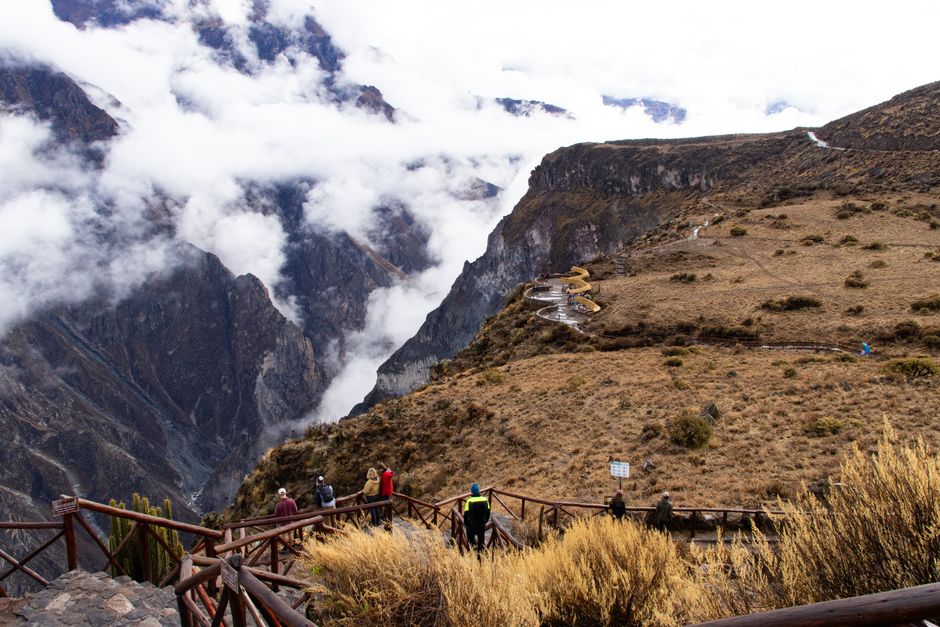
Colca Canyon, near Arequipa in southern Peru, reaches depths of around 3,270 metres — roughly twice as deep as the Grand Canyon. The single most spectacular family moment here is watching Andean condors launch from the canyon walls at Cruz del Condor lookout, usually between 8 and 10am on clear mornings. These are the largest flying birds in the world, and seeing them soar at eye level is genuinely awe-inspiring for kids and adults alike.
The canyon sits at high altitude — most viewpoints are above 3,600m — so altitude acclimatisation matters. Spend at least two days in Arequipa (at 2,350m) before heading into the canyon. This pairs naturally with Peru's most rewarding family destinations overall, many of which cluster in the southern highlands.
- Cruz del Condor viewing platform — the best free wildlife spectacle in Peru
- Hot spring pools at Chivay town — perfect for tired legs after canyon walks
- Traditional Collagua and Cabana villages with distinctive woven headwear
- Short canyon-rim walks with moderate terrain suitable for older children
- Terraced agricultural fields — some still farmed using pre-Inca methods
The full multi-day canyon trek (descending and ascending on foot) is challenging and best suited to teenagers and physically fit adults. For families with younger children, the rim-level day tours from Chivay are rewarding without the physical demands. Pair your visit with Peru's living cultural traditions — Colca villages host some of the country's most vibrant local festivals.

Lake Titicaca — The World's Highest Navigable Lake
At 3,812 metres above sea level, Lake Titicaca is the highest navigable lake on the planet, and it sits on the border between Peru and Bolivia. For families, the experience isn't just about the altitude record — it's about the living cultures on its islands. The Uros people build and inhabit floating islands made entirely of totora reeds, and a visit feels unlike anything else on a Peru itinerary.
The city of Puno is the gateway, reachable by train from Cusco along the scenic Andean plateau — a journey that is itself a highlight. Once on the lake, boats take visitors to the Uros Islands in under an hour, with longer excursions reaching the natural island of Taquile, where the community maintains weaving traditions recognised by UNESCO. Children typically find the reed-boat rides and island exploration immediately engaging.
- Uros Floating Islands — walk on the reeds, talk with Uros families, ride a reed boat
- Taquile Island — handwoven textiles, panoramic lake views, community-run restaurants
- Amantaní Island homestays — spend a night with a local family (best for older kids)
- Sunrise over the lake from Puno's waterfront promenade
- Lakeside market in Puno for local produce, wool goods, and street food
Altitude is the primary consideration at Titicaca. Arrive from Cusco rather than flying directly from Lima if possible — the gradual ascent helps. Read more about altitude and other practical concerns in our complete family travel tips for Peru.
Family Safety Tips for Peru's Natural Wonders
Peru's natural wonders are genuinely accessible to families — but each environment has specific considerations worth understanding before you travel. These are honest, practical points, not generic caution.
Altitude Acclimatisation
Both Colca Canyon and Lake Titicaca sit well above 3,500m. Plan at least two rest days at moderate altitude (Cusco or Arequipa) before visiting. Keep children well hydrated, avoid heavy meals, and watch for signs of altitude sickness — headache, nausea, and unusual fatigue. Descend immediately if symptoms worsen.
Amazon Health Prep
Visit your doctor or travel health clinic six to eight weeks before departure. Yellow fever vaccination is strongly recommended for the Madre de Dios region. Pack insect repellent with DEET for children, lightweight long sleeves for evening, and oral rehydration sachets. Drink only bottled or filtered water throughout the jungle.
Choosing Safe Operators
In remote areas, your operator's safety standards matter more than cost. Look for guides with first-aid certification, boats with life jackets sized for children, and lodges with emergency evacuation plans. Our guide to recommended Peru travel agencies covers what to ask before you book.
Canyon Trek Age Limits
The full Colca Canyon descent is steep, hot, and long — unsuitable for children under about 10 and those not used to sustained hiking. Rim-level viewing and short walks are suitable for most ages. Always carry more water than you think you'll need; shade is scarce on canyon trails.
Lake & River Water
Never let children swim in unvetted sections of the Amazon or its tributaries — caimans, electric eels, and strong currents are real hazards. Lake Titicaca's water is cold and the depth is extreme; only swim in designated, supervised areas. Reed boat excursions should always provide life vests for children.
Sun Protection at Altitude
UV radiation is significantly stronger at altitude. At 3,800m, sunburn develops faster than at sea level — even on overcast days. Apply high-SPF sunscreen, have children wear hats and sun-protective clothing, and reapply sunscreen every two hours during outdoor activities. Lips and the back of the neck are commonly forgotten.
Ready to Plan Your Peru Nature Adventure?
From the Amazon canopy to the shores of Titicaca, Peru's natural wonders are most rewarding when the planning is solid. Start with our full family travel guide, or connect with an agency that specialises in family itineraries.
Family Travel Tips for Peru